
How Many Layers of Paint on a New Car?
This is a common question for distributors, body shop owners, fleet managers, and refinish professionals who want to understand how factory paint systems are built and why they perform so well. A new car may look like it has only one glossy outer coating, but in reality, modern OEM automotive paint is a carefully engineered multi-layer system designed for corrosion resistance, adhesion, appearance, and long-term durability.
At SYBON, we often explain this topic to customers who are looking for a reliable automotive paint manufacturer with both quality and competitive pricing. The answer is not just about how many layers there are, but also about what each layer does and why it matters for vehicle protection and refinishing performance.
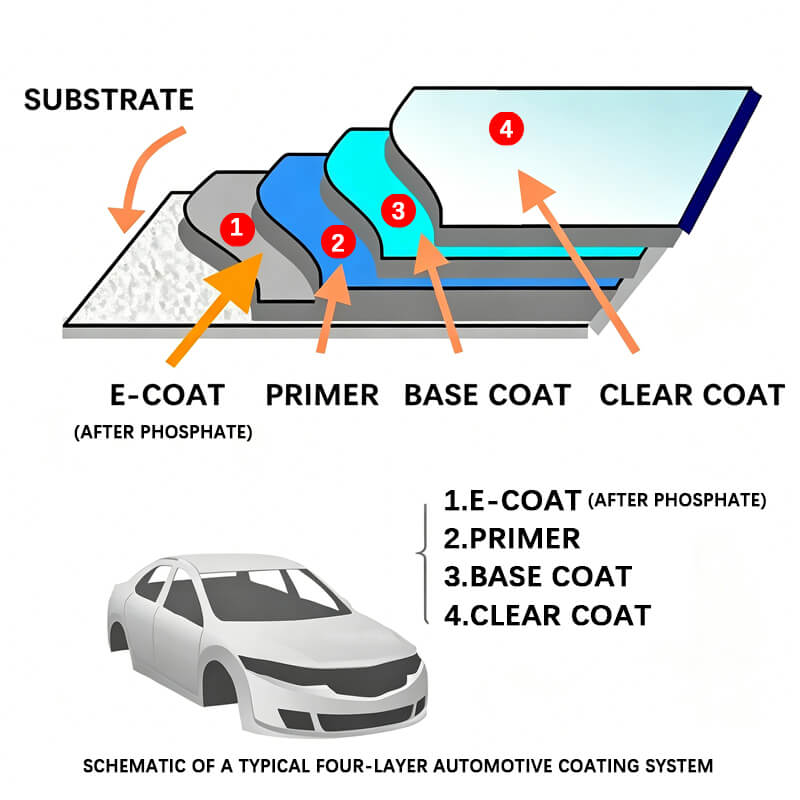
SYBON’s Answer: A New Car Usually Has 4 Factory Paint Layers
In general, a brand-new car is coated with four layers of paint at the factory. These layers are not simply decorative. Each one has a specific function in protecting the body and improving the final appearance.
1. Electrophoretic Coating Layer (E-coat)
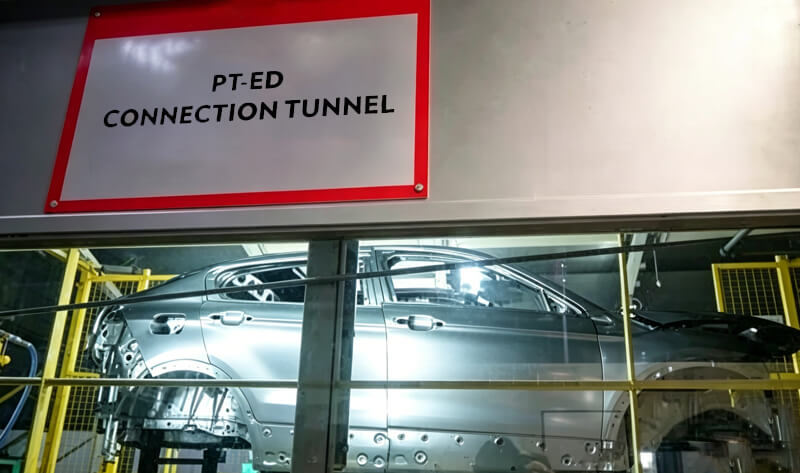
The first layer is the electrophoretic coating layer, also called the e-coat layer. Before this coating process, the metal sheet usually goes through phosphating treatment, which forms an insoluble phosphate film on the metal surface. This film helps protect the sheet metal and improves corrosion resistance.
Then the entire car body is fully immersed in an electrophoretic bath. The coating penetrates every corner and hidden area with no dead spots, making it one of the most important anti-rust layers in the whole paint system. Its main role is rust prevention and basic anti-corrosion protection. It is the lowest and most fundamental protection layer for the vehicle body.
2. Intermediate Primer Layer
After the e-coat, the next step is usually the intermediate primer layer. However, before this, many vehicles receive an additional anti-corrosion coating on the chassis because the underbody is one of the most vulnerable parts of the car. This extra protection is often called underbody armor or chassis protection, and it provides a double defense against corrosion.
The intermediate primer itself has several important functions. It helps fill minor dents and small surface defects, creates a smoother base for the base coat, and acts as a barrier between the e-coat and the topcoat system. It also improves the decorative quality of the color layer and contributes to corrosion resistance as well.
3. Base Coat Layer
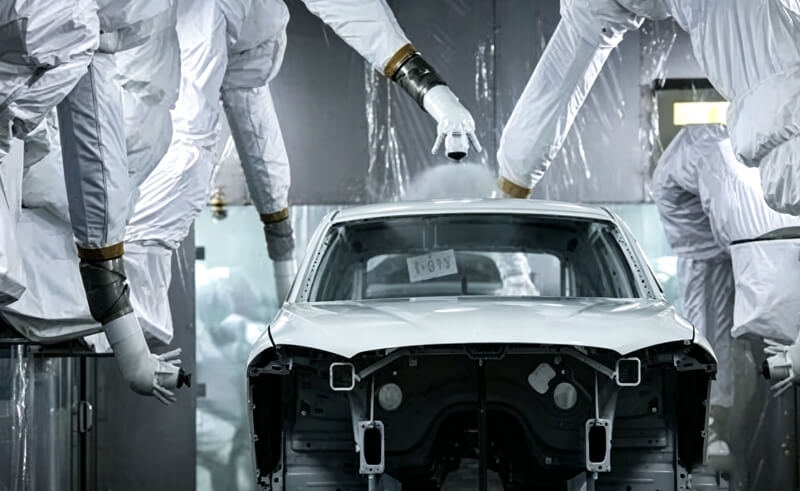
The third layer is the base coat, which gives the car its visible color. This is the layer people notice first when they look at a vehicle. There are two common types of color finishes:
- Solid color paint
- Metallic paint, which contains metallic particles for a brighter, more reflective appearance
The base coat is mainly responsible for the vehicle’s visual identity and style. It does not only determine the shade, but also affects the richness and depth of the finish.
4. Clear Coat Layer
The final factory layer is the clear coat. This is a transparent top layer that protects the base coat underneath. It adds gloss, improves visual depth, and provides resistance against UV rays, weathering, oxidation, and daily environmental damage.
Without a strong clear coat, the color layer would fade and lose its shine much faster. So the clear coat is essential for both appearance and long-term durability.
Why Factory Painting Is Called “Four-Coat, Three-Bake”
The above layers are part of the original automotive paint system. In most cases, all three layers except the base coat require baking. This process is often called “four-coat, three-bake”.
The baking temperature needs to reach above 170°C in many OEM systems. This high-temperature curing helps the paint layers bond strongly with the substrate and achieve better hardness, durability, and chemical resistance.
In recent years, some automakers have adopted a “three-coat, two-bake” process by removing the intermediate primer layer. This new method can help improve environmental performance and save energy. It is a more efficient production solution, but the exact system depends on the manufacturer, vehicle category, and cost strategy.
What About Automotive Refinish Paint Systems?
For vehicle repair and refinishing, the paint structure is usually different. In general, repair paint systems involve five layers:
1. Epoxy primer layer
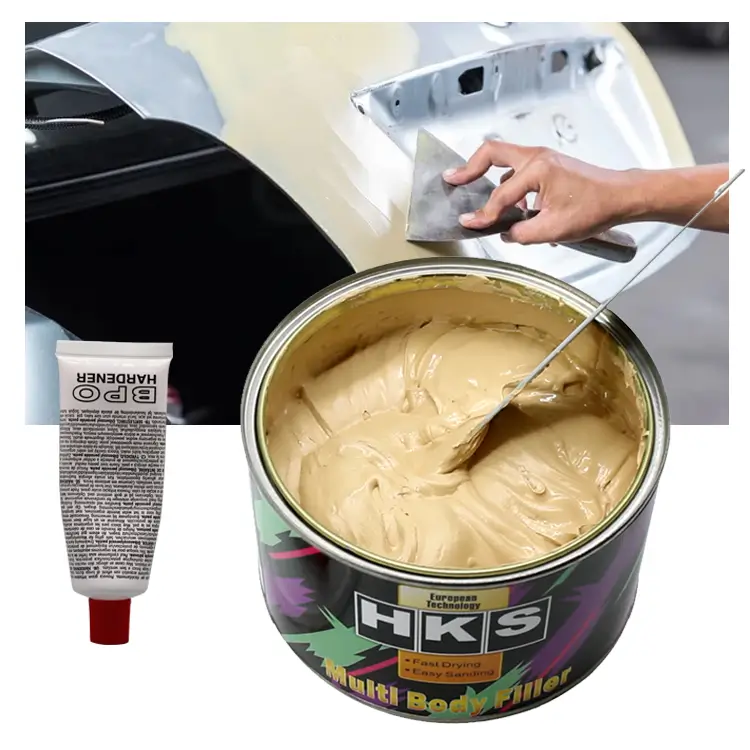
2. Body filler layer
3. Intermediate primer layer
4. Base coat layer
5. Clear coat layer
The materials are different from factory coatings, but the goal is similar: to rebuild protection, restore appearance, and deliver a durable finish. For body shops, fleet repair centers, and refinishing distributors, understanding these layers is essential for choosing the right products and building a stable repair process.
Why This Matters for Importers, Wholesalers, Fleets, and Refinishers
If you are an importer, wholesaler, fleet owner, or repair professional, knowing how many layers of paint a new car has helps you better understand product performance and customer expectations. OEM paint systems show us that professional refinishing also needs a complete and balanced solution. A good paint system is not just about color. It is about adhesion, anti-corrosion performance, filling ability, gloss, weather resistance, and long-term stability.
That is exactly where SYBON can help.
Why Choose SYBON?
SYBON is a leading Chinese automotive paint manufacturer focused on delivering competitive pricing, reliable quality, and one-stop purchasing service. We provide automotive refinish products designed for import agents, wholesalers, paint shop owners, body repair centers, and fleet maintenance businesses.
Compared with big international brands, SYBON may not be as widely known, but our product quality is highly comparable, while our cost performance is far more attractive. If you want dependable quality without paying a premium brand price, SYBON is your ideal supplier.
Our products are built to help you:
- Win more customers in your local market
- Improve your business competitiveness
- Increase your service value and profit margin
- Simplify sourcing with one-stop automotive refinish solutions
SYBON is actively looking for global distributors and is very willing to work with more partners worldwide. Whether you run a paint store, an auto repair center, or a distribution business, we welcome you to request samples for testing. Let’s build a mutually beneficial partnership and grow together.
Please contact us through our website and send us an email. SYBON will reply within 24 hours.
Source of this article:https://www.supersybon.com/
Get to know us through more channels: