
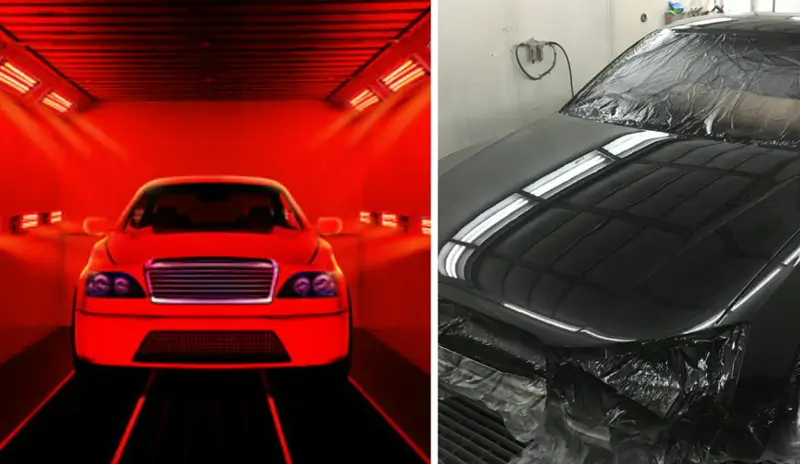
Car Paint Not Drying After Baking: Why It Happens and How SYBON Explains the Real Causes
When body shops follow the correct self-drying or baking process, they expect the paint film to cure properly, become hard, and achieve the required durability. However, in real refinishing work, one common problem is car paint not drying after baking. The surface may look finished, but when you touch it, it still feels slightly tacky or damp. The coating remains soft, the hardness is not enough, and the film may be dry on the surface but still uncured underneath.
This is not only frustrating for painters and repair shops, but it can also cause rework, complaints, and a loss of customer trust. For import agents, wholesalers, distributors, fleet owners, and repair businesses, understanding the true reasons behind this issue is extremely important.
What Does “Car Paint Not Drying After Baking” Look Like?
This problem usually appears in the following ways:
The paint surface seems to have dried, but the coating is still soft inside.
The film feels sticky, weak, or slightly moist after baking.
The hardness does not reach the expected standard.
The paint may show poor solvent resistance or abnormal surface texture.
In severe cases, the coating remains under-cured even after additional waiting time.
In short, the paint has not fully crosslinked or cured, so the film cannot achieve normal performance.
SYBON’s Analysis: Why Does Car Paint Not Dry After Baking?
According to SYBON’s experience in automotive refinishing, this problem usually does not come from just one single reason. In most cases, it is caused by a combination of material mismatch, improper mixing, environmental conditions, or incorrect spraying techniques.
1. Incorrect mixing ratio of two-component paint
Two-component paints such as 2K top coat, clear coat, epoxy primer, and 2K intermediate primer must be mixed strictly according to the manufacturer’s recommended ratio. If the hardener is added too little, the paint cannot react fully and will remain uncured. If too much hardener is added, the chemical balance is also destroyed, and the coating may still show abnormal curing behavior, including moisture-like softness or surface reactivity.
This is one of the most common reasons for car paint not drying after baking. In refinishing work, accurate ratio control is not optional. It is the foundation of proper curing.
2. Using the wrong hardener
Another major reason is the use of an unsuitable hardener. Some spray shops and mixing centers choose materials simply based on price. They may keep hardeners from different brands, different solid contents, and different systems all together, then use them casually without checking compatibility.
This creates a serious problem. Different brands may have different formulations, reaction speeds, and chemical structures. When a hardener is used with the wrong paint system, the film may dry slowly, fail to cure, or show a tacky and soft finish after baking.
In many cases, the product is blamed, but the real issue is improper matching and misuse. From SYBON’s point of view, this is not a product failure problem; it is often an application and compatibility problem.
3. The spraying environment is too cold, too humid, or poorly ventilated
Weather and workshop conditions have a huge effect on paint curing. In cold or damp environments, especially during rainy seasons, solvent evaporation slows down and the chemical reaction between paint and hardener becomes weaker and slower. Even if the film is baked, the actual cure may still be incomplete.
When the air is humid, paint can absorb moisture from the environment. When air circulation is poor, solvent cannot escape efficiently. This means the coating may appear dry on the outside while staying soft underneath.
In such conditions, baking becomes even more important because heat helps accelerate the reaction and improves drying speed. But if the environment is extremely poor, baking alone may not fully solve the problem.
4. The paint film is sprayed too thick
A single coat that is too thick can easily cause curing failure. When the film is overly heavy, solvent gets trapped inside the coating and cannot escape properly. This often leads to surface drying but internal softness, slow curing, or abnormal film performance.
For automotive refinishing, proper film thickness is critical. A thicker layer does not always mean better results. In fact, excessive thickness often increases the chance of car paint not drying after baking.
5. Incorrect spraying process
Sometimes the problem comes from the process sequence itself. For example, if a 2K solid color coat is used as a base layer and then clear coat is applied in the wrong way, the final film may not dry properly. If incompatible layers are stacked together, or if the coating system is applied outside the recommended process, the paint may remain soft or unstable after baking.
This is why technicians must follow the correct system and construction method. Automotive refinishing is not just about spraying paint; it is about using the right system in the right order.
How SYBON Suggests Solving This Problem
If the paint has already been baked but still does not dry properly, the first remedy is to increase the baking temperature and extend the baking time within the safe range recommended by the product system. In many cases, stronger heat can help the coating finish curing.
However, if re-baking still cannot solve the issue, the only reliable solution is to sand off the defective coating and respray it correctly. Once a coating is seriously under-cured, trying to force it into performance usually does not work.
Why Choose SYBON?
SYBON is a professional automotive paint manufacturer from China, trusted by import agents, wholesalers, distributors, fleet owners, and refinishing businesses around the world. SYBON combines reasonable pricing with strong product quality, and also offers one-stop purchasing support for automotive refinishing products.
Compared with some large international brands, SYBON may not have the same level of market name recognition, but the quality is highly competitive. For customers who want dependable paint performance without paying premium brand prices, SYBON is a practical and profitable choice. It helps local businesses stay competitive in their markets and improve overall operating efficiency.
SYBON is actively looking for global distributors and welcomes cooperation with paint shops, repair center owners, import agents, and trade partners. If you are looking for a reliable automotive refinishing supplier, SYBON invites you to request samples for testing. We are committed to mutual growth, better market opportunities, and stronger business results.
If you are interested in becoming a distributor or discussing cooperation, please contact SYBON through our website. We will reply within 24 hours.
Source of this article:https://www.supersybon.com/
Get to know us through more channels: