
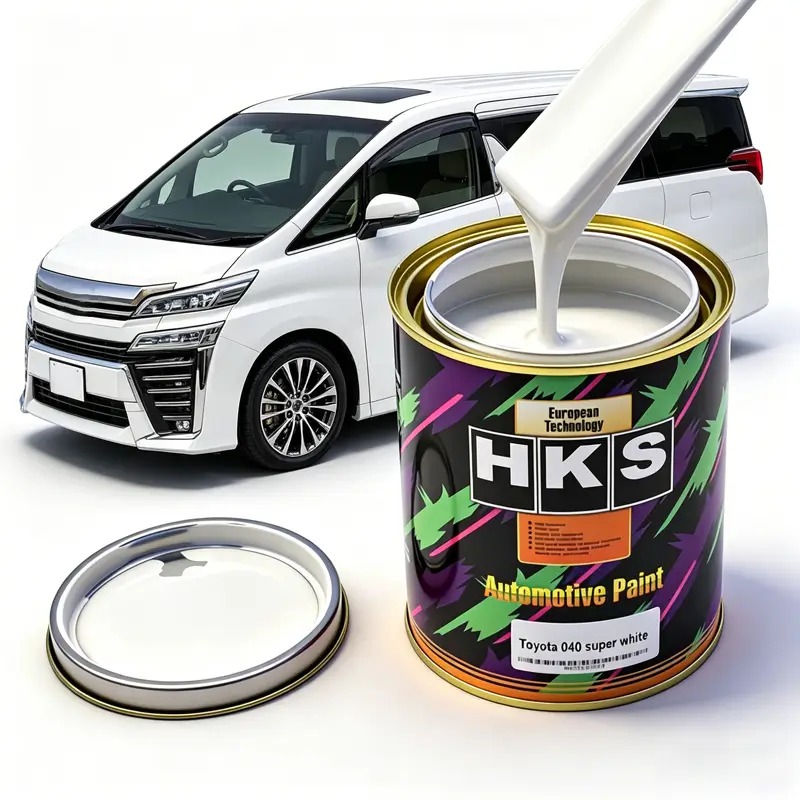
White Car Paint Turning Yellow: Causes, Prevention, and Reliable Solutions for Refinish Professionals
White car paint is supposed to look clean, bright, and premium. That is exactly why white car paint turning yellow is such a frustrating problem for body shops, distributors, fleet owners, and refinishers. A freshly sprayed white panel may look perfect at first, but by the next morning, a large yellow patch appears. Even after polishing, the yellow stain still remains clearly visible. When this happens, the repair work often has to be redone, wasting labor, materials, and time.
For businesses in the automotive refinishing industry, this is more than a cosmetic issue. It damages productivity, increases rework rates, and lowers customer trust. Understanding the real cause of yellowing is the first step to preventing it.
What White Car Paint Turning Yellow Looks Like
When white car paint turns yellow, the defect usually appears as a visible warm-toned patch, a dull yellow cast, or an overall dirty-looking area on the surface. In many cases, the yellowing shows up after the paint has already seemed dry on the outside. The surface may look acceptable right after spraying, but once it sits overnight, the color changes become obvious.
This kind of problem is especially disappointing because white finishes are highly sensitive. Even a slight color shift stands out much more on white than on darker colors. A yellow stain on white paint is difficult to hide, and simple polishing usually cannot remove it, because the issue is often not on the surface alone. It is frequently tied to the coating structure, moisture content, or material incompatibility.
Why Does White Car Paint Turn Yellow?
SYBON has analyzed the most common reasons behind this problem. In real-world refinishing work, yellowing is usually linked to process control, environmental conditions, and material quality.
1. Spraying clear coat too soon after 1K white paint
One of the most common causes is applying clear coat before the 1K white paint has fully dried. If the base coat is still holding solvent or has not cured evenly, the clear coat can trap that unstable layer underneath. This often leads to yellowing later, especially after the car sits overnight.
In other words, the paint may look dry on the surface, but it is not fully dry inside. Once the clear coat seals it in, the trapped material can react and cause discoloration. For this reason, waiting for complete drying is essential.
2. Moisture absorbed into the paint film before clear coating
If the paint film absorbs water and the clear coat is applied directly afterward, yellowing may also occur. This becomes even more likely in rainy weather or humid seasons. Water can remain inside the coating layer and interfere with the final appearance.
Many refinishers underestimate how much moisture can affect white paint. Even if the panel feels dry to the touch, hidden moisture can still be present in the film. Once the clear coat goes on, that moisture is locked in, and yellowing can appear later.
3. Excessive humidity in the spraying environment
High humidity is another major factor. In simple terms, the air contains too much water vapor, and that moisture settles on or into the paint film. White paint is especially vulnerable because it reveals changes in tone very quickly.
A humid environment also slows down the drying process, which increases the chance of trapped moisture, poor curing, and later discoloration. That is why environmental control matters so much in automotive refinishing.
4. Dirty spraying equipment or contaminated tools
Yellowing can also come from equipment that was not cleaned properly. Leftover residue, old paint contamination, dust, or chemical buildup inside the spray gun or related tools can affect the whiteness of the finish.
This is a problem that is often overlooked. Even when the paint material itself is good, contamination during application can still cause visible defects. Clean equipment is a basic requirement for stable color performance.
5. Expired clear coat or low-quality hardener
The quality of the clear coat system is just as important as the base color. If the clear coat has expired, deteriorated, or become unstable, yellowing is much more likely. The same is true when the hardener is of poor quality and has weak yellowing resistance.
A poor clear coat system can accelerate discoloration, especially on white finishes. That is why body shops should not only focus on the topcoat color, but also on the stability of the entire refinish system.
A Special Note About 2K Solid White
It is also important to understand that 2K solid white can still show yellowing after clear coating. This is because 2K solid white itself often has a slightly yellow undertone. When a clear coat is applied on top, that yellow base may become more visible through the clear layer.
So even though 2K white is a strong and durable coating system, it still requires careful color selection, correct application, and stable materials. If the formulation is not balanced, the yellow tone may surface more clearly after clear coating.
How SYBON Helps Customers Reduce Yellowing Problems
SYBON understands that distributors, import agents, wholesalers, fleet owners, and repair shops need more than just a paint product. They need a stable supply chain, dependable quality, and products that help reduce rework.
SYBON is a professional automotive paint manufacturer from China, offering a strong balance between reasonable pricing and reliable performance. While our brand may not be as famous as some large international names, our product quality is highly comparable, and our cost performance is one of our biggest strengths.
For distributors and wholesalers, this matters a lot. In competitive local markets, a product that combines quality with affordability can become a powerful business tool. It helps you win customers, improve margins, and build a stronger market position.
SYBON provides one-stop automotive refinish solutions, helping partners source multiple related products more efficiently. We are actively looking for global distributors and welcome cooperation with agents, paint shop owners, repair center owners, fleet service providers, and wholesalers who want a reliable long-term supplier.
If you are searching for a fair-priced automotive paint manufacturer with solid product quality, SYBON is ready to support your business growth. We welcome sample requests for testing, because we believe real performance should speak for itself. We are committed to mutual benefit, stable cooperation, and helping our partners improve both sales and profit.
Please contact us through our website and send us an email. We will reply within 24 hours.
Final Thoughts
When white car paint turning yellow happens, the cause is usually not just one single factor. It may come from premature clear coating, moisture in the paint film, high humidity, equipment contamination, or poor clear coat and hardener quality. In many cases, even the best-looking spray job can fail if the process is rushed or the environment is not controlled.
For body shops and distributors, prevention is always cheaper than rework. And for businesses looking for a dependable supplier, SYBON offers a practical combination of quality, value, and long-term partnership support.
Source of this article:https://www.supersybon.com/
Get to know us through more channels: