

How to Blend Automotive Paint: The Key to a Seamless Spot Repair
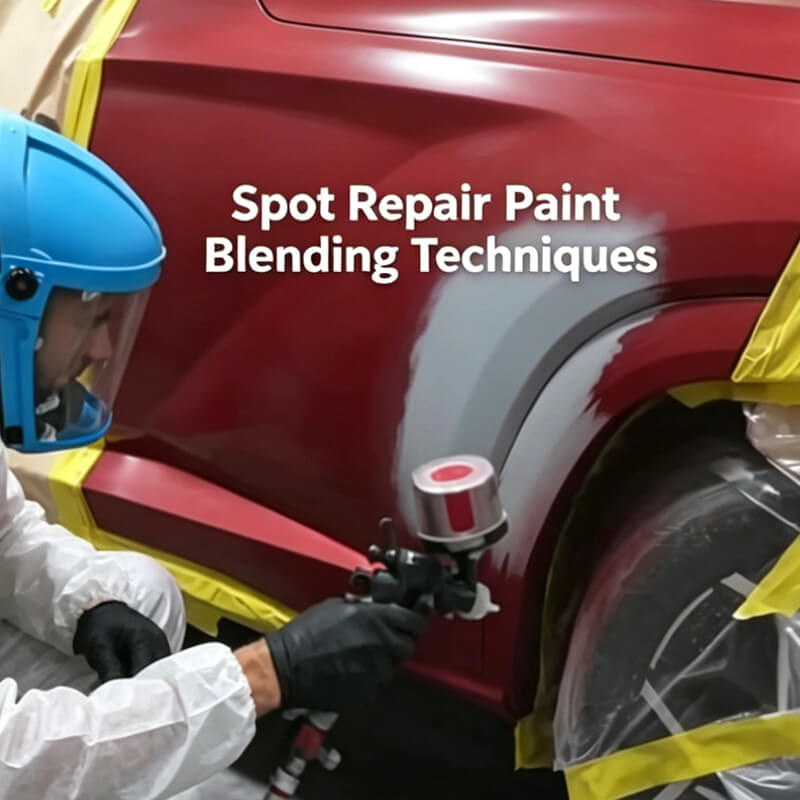
When it comes to automotive refinishing, one of the most important skills is knowing how to blend automotive paint properly. A repair may have the correct color, gloss, and clear coat, but if the interface between the old paint and the new paint is visible, the entire job will look unprofessional.
This is why spot repair paint blending techniques matter so much. They help the new coating merge with the old surface so the repaired area becomes nearly invisible to the eye. For import agents, wholesalers, distributors, fleet owners, and refinishers, mastering this process can improve repair quality, customer satisfaction, and business reputation.
At SYBON, we understand that professional refinishing is not only about appearance, but also about efficiency, consistency, and value. Our automotive refinish products are designed to help users achieve excellent repair results with a practical cost advantage.
What Is the Interface in Automotive Spot Repair?
In automotive paint repair, the interface refers to the transition area between the new paint film and the old paint film. This is the critical zone where the repair can either disappear smoothly or remain obvious.
The goal is simple: make the new and old coatings blend together so naturally that no one can tell a repair was done.
The method used depends on whether the repair will be polished after drying or left without polishing.
Two Common Spot Repair Paint Blending Techniques
| Repair Situation | Main Method | Key Advantage | Important Note |
|---|---|---|---|
| Repair will be polished | Sand, overlap basecoat and clear coat gradually, then polish | Nearly invisible finish | Sanding area must be extended and complete |
| No polishing required | Use Joining Agent beyond interface | Fast and effective blending | Surface must be sanded with 2000 grit |
Method 1: Blend the Interface When the Repair Will Be Polished
If the repaired area will be polished after drying, the interface can be treated with a careful sanding and spraying process.
Step 1: Sand the surface correctly
Use 2000 grit sandpaper and make sure the sanding area extends at least 15 cm beyond the 800 grit sanding marks. This step is very important.
The 2000 grit sanding must be even and complete. Do not leave any gaps or untreated spots, because incomplete sanding can make the blend line visible after painting.
Step 2: Confirm the sanding zones
Before spraying, clearly identify the range of both the 800 grit area and the 2000 grit area. This helps control how far each layer should be sprayed.
Step 3: Spray the 1K basecoat beyond the repair zone
When applying the 1K basecoat, spray about 5 cm beyond the 800 grit area. This allows the new color to fade gradually into the surrounding finish.
Step 4: Apply clear coat in layers
For the clear coat:
- The first coat should extend about 5 cm beyond the basecoat
- The second coat should extend about 5 cm beyond the first clear coat
- The second clear coat must not go beyond the 2000 grit sanding area
This is the key rule. The clear coat should not pass the interface position that has been prepared with 2000 grit sanding.
Step 5: Polish after curing
Once the clear coat has fully cured, lightly sand the minor defects with 2000 grit paper and then polish the area.
If the process is done correctly, the repair line becomes extremely difficult to see with the naked eye.
Method 2: Blend the Interface When No Polishing Is Needed
In some repair situations, polishing is not required. In this case, a Joining Agent can be used to spray beyond the interface and help the old and new coatings merge visually.
This method is especially useful when speed and convenience are important, but the finish still needs to look clean and natural.
Important rules for Joining Agent use
The surface under the Joining Agent must already be sanded with 2000 grit sandpaper. If the surface is not properly sanded, the material will not adhere well.
The Joining Agent is sprayed directly and does not need to be mixed with other products.
Spraying tips for better atomization
To improve spray quality:
- Do not set the air pressure too low
- The pressure should be slightly lower than the pressure used for clear coat
- Keep the spray gun moving steadily
- Control the gun distance carefully
- Avoid spraying too much material at once, because the product can run easily
This method works by dissolving the slightly rough particles at the interface, allowing the new and old coatings to blend together more naturally.
Why Joining Agent Works So Well
Joining Agent is designed to soften the coarse texture at the edge between new and old paint. By doing so, it helps the two layers merge visually and reduces the appearance of a repair line.
That means:
- The transition looks smoother
- The repaired area is less noticeable
- The finish appears more professional
- The repair result is more acceptable for premium customers
For repair shops and distributors, products like this create real value because they help users deliver better results without unnecessary complexity.
SYBON’s Understanding of Professional Automotive Refinishing
SYBON is a professional automotive paint manufacturer focused on combining reasonable pricing with reliable product quality. Our goal is to help customers achieve strong performance without paying the high cost often associated with large international brands.
Compared with some major brands, SYBON may not have the same global name recognition, but our product quality is designed to be highly competitive. For many customers, that balance of quality and cost-effectiveness is exactly what they need to win in their local market.
SYBON offers a one-stop purchasing service for automotive refinish products. We are actively looking for global agents and distributors who want to build a stronger business with dependable refinishing solutions.
Why Distributors and Repair Businesses Choose SYBON
| SYBON Advantage | Business Value |
|---|---|
| Competitive pricing | Improve profit margins and market competitiveness |
| Stable quality | Ensure consistent repair results |
| One-stop supply service | Simplify procurement and save time |
| Wide application range | Suitable for wholesalers, retailers, and repair centers |
| Global partnership opportunities | Support long-term distributor cooperation |
Frequently Asked Questions
1. What is the best way to blend automotive paint in spot repair?
The best method depends on the repair situation. If polishing is allowed, use gradual sanding and layered spraying. If polishing is not needed, a Joining Agent can help create a smoother visual transition.
2. Why is the interface visible after repainting?
The interface becomes visible when sanding is incomplete, the spray area is too narrow, or the transition between old and new paint is not managed properly.
3. Can I spray clear coat directly over the interface?
Yes, but only when the surface has been properly prepared and the clear coat is applied in controlled, overlapping layers.
4. What grit sandpaper should be used for blending?
For the final blend area, 2000 grit sandpaper is essential. It helps create a smoother base for the transition zone.
5. Does Joining Agent need to be mixed before spraying?
No. Joining Agent is sprayed directly and does not need to be mixed with other products.
6. Who should use these spot repair paint blending techniques?
These techniques are useful for body shops, refinishers, fleet maintenance teams, import agents, wholesalers, and distributors who want better repair results.
Final Thoughts
Learning how to blend automotive paint is one of the most valuable skills in refinishing. Whether you are polishing after the repair or using a Joining Agent for a no-polish job, the key is careful surface preparation, controlled spraying, and proper overlap.
For professionals who need dependable, cost-effective refinish solutions, SYBON is ready to support your business. If you are looking for a reliable automotive paint manufacturer with quality products and one-stop service, contact SYBON for samples and cooperation opportunities.
SYBON welcomes global agents, distributors, paint shop owners, and repair center managers to contact us through our website by email. We will respond within 24 hours.
Source of this article:https://www.supersybon.com/
Get to know us through more channels: