

How Thick is Automotive Paint? A Complete Guide to Paint Layers and Thickness
Automotive paint is usually 100 to 200 microns thick in total, or about 4 to 8 mils, depending on the vehicle, paint system, and number of coats applied. This total thickness includes the primer, basecoat, and clear coat, each of which serves a different purpose in protecting and finishing the vehicle surface.
Understanding automotive paint thickness is important because it affects not only the appearance of the car, but also its durability, corrosion resistance, and repair quality. A properly balanced coating system helps the finish look smooth, last longer, and resist damage from weather, chemicals, and UV exposure.
Automotive Paint Layers and Their Thickness
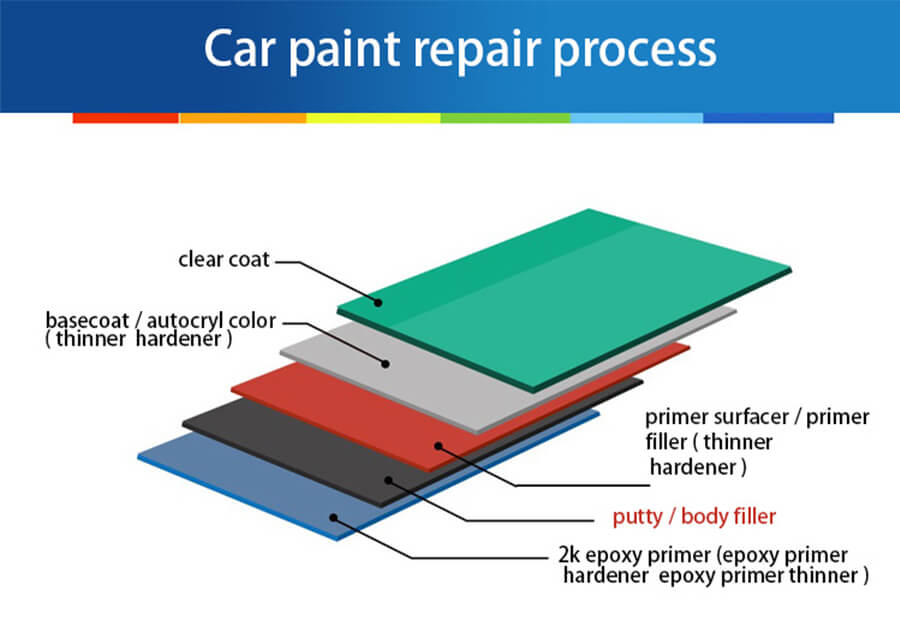
Automotive paint is not a single coating. It is a layered system, and each layer contributes to the final look and performance of the finish.
1. Primer Layer
The primer is the first layer applied to the vehicle surface. Its main job is to improve adhesion, smooth minor surface imperfections, and protect the metal from corrosion.
Typical thickness: 20 to 50 microns
A good primer layer helps create a stable foundation for the next coats. Without proper primer coverage, the paint system may not bond well or provide enough protection over time.
2. Basecoat (Color Coat)
The basecoat is the layer that gives the vehicle its color. It may be solid, metallic, or pearlescent, depending on the desired appearance.
Typical thickness: 10 to 20 microns
In many cases, the basecoat is applied in multiple thin layers to achieve uniform color and better visual depth. Metallic and pearl finishes may require additional coats to produce the correct effect.
3. Clear Coat
The clear coat is the outermost layer of the paint system. It provides gloss, depth, and protection against UV rays, oxidation, chemicals, and environmental wear.
Typical thickness: 30 to 50 microns
The clear coat is especially important because it protects the color layer underneath. It also plays a major role in how shiny and smooth the finish appears.
Typical Automotive Paint Thickness by Layer
| Paint Layer | Main Purpose | Typical Thickness |
|---|---|---|
| Primer | Improves adhesion and corrosion protection | 20–50 microns |
| Basecoat | Provides color and visual effect | 10–20 microns |
| Clear Coat | Adds gloss and protects against UV and damage | 30–50 microns |
| Total System | Full painted finish | 100–200 microns |
Factors That Affect Automotive Paint Thickness
The exact thickness of automotive paint can vary from one vehicle to another. Several factors influence the final result.
Type of Paint System
Different coating systems can produce different thicknesses. Modern urethane systems are generally more durable and consistent than older enamel or lacquer systems.
Application Method
Spray application usually gives a more even and controlled finish than manual application methods. Professionals often apply several thin coats instead of one thick coat to improve appearance and performance.
Number of Coats
The more layers applied, the greater the total thickness. Extra coats may be used for special finishes, additional durability, or improved coverage.
OEM vs Repaint
Factory paint thickness and repaint thickness are often different. Repaired or repainted panels may show higher or less uniform readings than original factory panels.
How to Measure Automotive Paint Thickness
Measuring paint thickness is useful for quality control, repair evaluation, and maintenance planning. The most common tool is a paint thickness gauge.
Paint Thickness Gauge
A paint thickness gauge measures the coating thickness on metal surfaces and helps determine whether the finish is original, repainted, or unusually thick in a certain area.
Digital paint thickness gauges are popular because they are fast, accurate, and easy to use.
Microns vs Mils
Paint thickness is commonly measured in microns (µm) or mils.
- 1 mil = 25.4 microns
- 100–200 microns = about 4–8 mils
Knowing both units is helpful because different markets and tools may use different measurement systems.
Why Accurate Measurement Matters
Accurate paint thickness measurement helps identify:
- weak or thin clear coat areas
- over-polished panels
- previous repairs or touch-ups
- areas that may need repainting
This information is especially important for professional detailers, body shops, and automotive paint technicians.
Why Paint Thickness Matters for Maintenance and Repair
Paint thickness affects the way a vehicle is maintained, polished, and repaired.
Polishing and Buffing
Polishing removes a small amount of clear coat. If the clear coat is already thin, aggressive polishing may cause damage and expose the basecoat underneath.
Repainting and Touch-Ups
When repainting or repairing a panel, matching the proper thickness helps achieve a smoother transition and better adhesion.
Detecting Previous Repairs
Thicker or uneven paint readings may suggest that a panel has been repaired, repainted, or filled. This makes paint thickness gauges useful for vehicle inspections.
Common Questions About Automotive Paint Thickness
Is thicker automotive paint always better?
Not always. While enough thickness is important for protection, excessively thick paint can lead to cracking, poor curing, or surface defects. A balanced coating system is more important than thickness alone.
What is a normal car paint thickness?
A normal automotive paint system is usually around 100 to 200 microns in total thickness, although the exact number depends on the vehicle and coating process.
Can paint thickness show if a car has been repainted?
Yes. If one area is much thicker than the surrounding panels, it may indicate repainting or body repair.
FAQ
How thick is automotive paint in microns?
Most automotive paint systems are around 100 to 200 microns in total thickness, depending on the number of coats and the type of finish.
What is the thickness of clear coat on a car?
Clear coat is usually around 30 to 50 microns, though the exact thickness may vary by manufacturer and paint system.
What tool is used to measure car paint thickness?
A paint thickness gauge is commonly used to measure total coating thickness on automotive panels.
Can paint thickness reveal previous repairs?
Yes. Areas with unusually high or uneven thickness may indicate repainting, bodywork, or touch-up repairs.
Is thicker car paint always better?
No. Excessively thick paint can cause cracking, uneven curing, or other quality issues. A balanced coating system is more important than thickness alone.
Conclusion
Automotive paint thickness is more than just a number. It affects protection, gloss, repair quality, and long-term durability. In most cases, a complete automotive paint system measures around 100 to 200 microns, with each layer serving a specific purpose.
By understanding the thickness of primer, basecoat, and clear coat, car owners and professionals can make better decisions about polishing, repainting, and quality control.
At SYBON, we focus on automotive paint systems designed for consistent coverage, strong adhesion, and durable finish performance. If you are testing products or looking for a reliable distributor partnership, feel free to contact us for samples and business inquiries.
Source of this article:https://www.supersybon.com
Get to know us through more channels: