
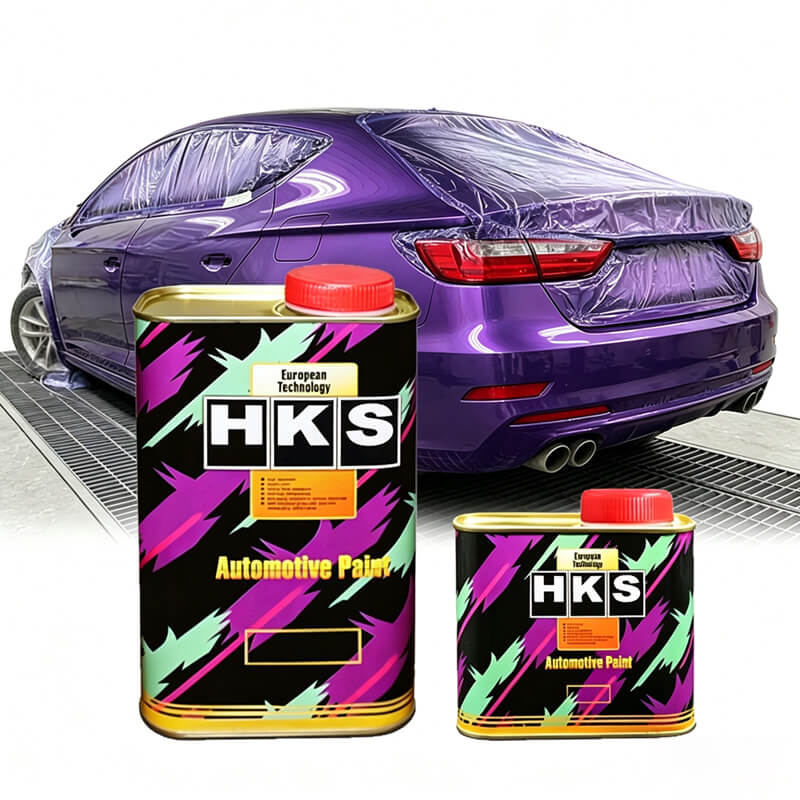
Understanding Car Paint Hardener in Automotive Refinishing
Car paint hardener, also commonly called curing agent, is one of the most important components in a two-component coating system. In automotive refinishing, it works together with base materials such as clear coat, primer, or filler to trigger a chemical reaction that allows the coating to cure properly. Without the correct hardener, the paint film cannot achieve the durability, gloss, adhesion, and resistance expected in professional repair work.
For distributors, import agents, fleet maintenance teams, and auto repair businesses, understanding car paint hardener is not just a technical detail. It is directly connected to product performance, customer satisfaction, and long-term business reputation. A high-quality hardener helps the coating system dry and cure in a controlled way, improving the final finish and reducing the risk of defects. A poor-quality hardener, by contrast, may cause problems such as slow drying, poor hardness, surface grain, loss of gloss, yellowing, or even coating failure.
In practical use, car paint hardener must match the coating system it is designed for. Different products require different curing speeds and chemical characteristics. Fast hardeners are often used in cooler conditions or for quick repairs, while slow hardeners are better suited to warmer environments or larger spray jobs. Choosing the wrong hardener can affect the entire refinishing result, even when the paint or clear coat itself is good.
Another important point is that car paint hardener is chemically active. It reacts not only with the paint system, but also with moisture in the air. That is why storage and handling are critical. Once opened, the product becomes more vulnerable to contamination, which can reduce its service life and performance. For this reason, professional users should treat hardener as a sensitive chemical material, not as an ordinary consumable.
| 920B | Standard hardener |
| 920K | Fast dry hardener |
| 920M | Slow dry hardener |
| 960B | Mid-concentration standard hardener |
| 960K | Mid-concentration fast dry hardener |
| 960M | Mid-concentration slow dry hardener |
| 980B | High concentration standard hardener |
| 980K | High concentration fast dry hardener |
| 980M | High concentration slow dry hardener |
| Color | Transparent |
| Match With | 2k pure color and clear coat |
| Application | Car Painting, Car Repair |
| Shelf Life | 2 years in original sealer can in cool and dry place at 20℃ |
| Mixing Ratio | Clear Coat : Hardener = 2 : (0.2-0.6) |
| 2k Color Paint : Hardener = 2 : 1 |
How to Store Unused Car Paint Hardener After Opening
Many users focus on application but overlook storage. In fact, improper storage is one of the main reasons car paint hardener becomes unusable before the container is empty. Because hardener is highly reactive, even a small amount of moisture exposure can lead to thickening, crystallization, gelation, or complete failure.
1. Seal Out Air and Moisture Immediately After Use
The most important rule is simple: keep air and moisture away. After each use, the original cap should be tightened immediately. Before closing the bottle, make sure the bottle neck and thread area are completely clean. Residual hardener around the cap thread can harden over time and prevent a tight seal. Once the seal is no longer airtight, moisture gradually enters the container and the product may begin to thicken or gel.
This small cleaning step is often ignored, but it is one of the most effective ways to extend the life of an opened hardener. A clean bottle mouth means a better seal, and a better seal means better protection.
2. Store in the Right Environment
Storage conditions directly affect the life of car paint hardener. The best environment is cool, dry, and away from direct sunlight. A recommended storage temperature is generally between 15°C and 25°C. Avoid placing the product in high-temperature areas, in spray booths, near ovens, or on damp floors.
It is also wise to use a dedicated storage cabinet for chemical products. Car paint hardener should be kept away from peroxide products, acids, and other incompatible materials to reduce the risk of unwanted reactions. Good storage habits are especially important for wholesalers, repair centers, and fleet maintenance operators that manage larger quantities of coating products.
3. Watch for Signs of Deterioration
Before using opened hardener, always inspect its condition. If the product has darkened noticeably, become thicker than normal, developed sediment at the bottom, or shown visible crystallization, it may already have deteriorated. In that case, it should not be used.
Using expired or contaminated hardener can create serious problems in the final paint job. It may cause poor curing, reduced gloss, surface defects, or weak film strength. In professional refinishing, one defective batch can damage both the work result and the customer’s trust.
4. Use Opened Product as Soon as Possible
Even with careful storage, opened hardener should not be kept for too long. The best practice is to use it as quickly as possible after opening. The longer it remains in use, the greater the chance of moisture exposure and performance loss. Proper sealing and environmental control can extend service life, but they cannot make an opened product last forever.
For this reason, businesses should buy quantities that match their real usage rhythm. This is especially important for distributors and repair shops that want stable inventory turnover and lower waste.
Why SYBON Is a Reliable Choice for the Market
For import agents, distributors, fleet owners, and repair professionals who are looking for a car paint manufacturer that combines reasonable pricing with dependable quality, SYBON is a strong option.
SYBON focuses on practical value. Our products are designed to offer quality comparable to well-known brands, while maintaining a more competitive price structure. This balance gives distributors a stronger advantage in local markets where customers are demanding better performance without accepting premium-brand pricing. In many cases, that combination is exactly what helps a business grow.
SYBON is also committed to one-stop supply. Instead of sourcing automotive refinish products from multiple suppliers, partners can work with SYBON for a broader product range and more efficient purchasing. This makes procurement easier, reduces communication costs, and helps businesses manage supply more effectively.
As a China-based automotive paint manufacturer, SYBON is actively looking for global agents and long-term partners. We welcome more distributors, paint shop owners, and auto repair center owners to join us in mutual cooperation and shared growth. If you are looking for products that can help you compete more effectively in your local market, SYBON can be a powerful business solution.
If you are interested in becoming a distributor, we welcome sample requests for testing. We believe that product quality speaks for itself, and we are happy to support our partners with practical solutions that help improve sales performance and profit margins.
Final Thoughts
Car paint hardener is a small component with a major role in automotive refinishing. Its performance affects curing speed, film strength, gloss, and overall finish quality. Just as important, its storage conditions determine whether the product remains usable after opening. By sealing it properly, storing it in a cool and dry place, and checking for signs of deterioration, users can reduce waste and protect coating performance.
For businesses seeking reliable automotive refinish products at a reasonable cost, SYBON offers a practical and competitive choice. With quality, value, and one-stop supply support, SYBON is ready to cooperate with global partners and help them build stronger market presence.
Source of this article:https://www.supersybon.com/
Get to know us through more channels: