
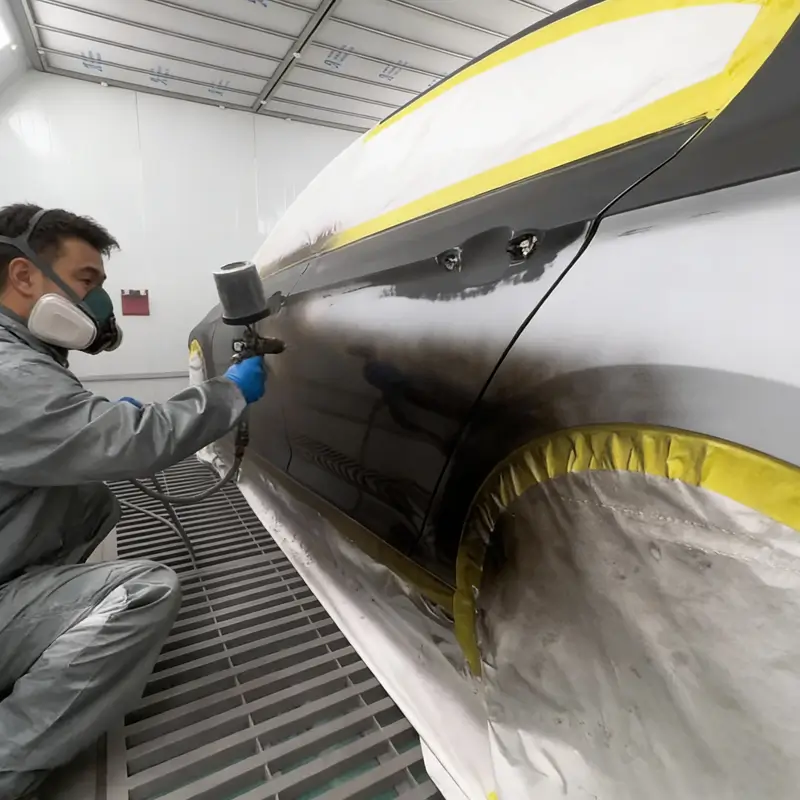
How to Improve Auto Paint Adhesion: Causes, Practical Solutions, and Best Practices for Distributors and Repair Shops
Auto paint adhesion determines how long a repair or refinish will last. Poor adhesion leads to bubbling, peeling, flaking or cracking—problems that damage reputation, raise warranty costs and reduce resale value. For import agents, wholesalers, fleet owners and repair shops, understanding the root causes and effective solutions is essential to deliver reliable, profitable work. This article explains the main factors that affect auto paint adhesion and gives practical, field-ready optimization steps you can adopt today.
Why auto paint adhesion matters
Adhesion is the chemical and mechanical bond between the paint layers and the substrate. Strong adhesion means fewer callbacks, better long-term appearance and lower lifecycle costs for customers. For distributors and dealers, selling paint systems that deliver consistent adhesion builds trust with body shops and fleets—so choosing the right products and teaching correct procedures is as important as price.
Main factors that weaken adhesion
1. Poor substrate preparation
Oil, wax, silicone, dust, rust or residual old paint will block adhesion. Even tiny residues or insufficient feathering at repair edges can create telltale failure points. Plastics, galvanized steel and aluminum require specialized pretreatment—standard metal prep isn’t always enough.
2. Wrong primer or incompatible systems
Primers act as the bridge between substrate and topcoat. Using the wrong primer for the material (for example, generic primer on plastic) or combining incompatible primer/paint chemistries leads to separation. Over-thick primer coats or insufficient curing before topcoat also weaken the bond.
3. Incorrect paint mixing and pot life
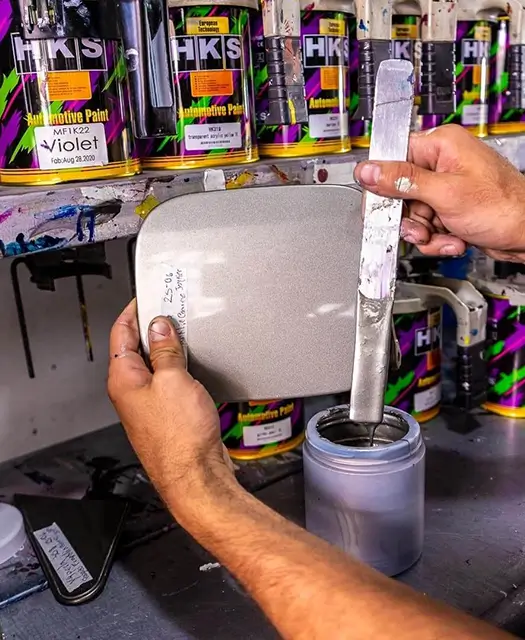
Two-component (2K) systems require precise mixing ratios of paint, hardener and reducer. Over- or under-catalyzing changes cure chemistry; wrong reducer choice affects flow and film formation. Using mixed paint past pot life can leave partially cured chemistry that cannot adhere properly.
4. Poor application technique and film build
Too heavy or too light coats, improper flash-off times between coats, or using the wrong spray technique create weak layers. Contaminated spray equipment or clogged needles produce uneven film and adhesion defects.
5. Environmental conditions during application
Temperature and humidity dramatically affect solvent evaporation and curing. Low temperatures slow curing and reduce crosslinking, while high humidity can cause moisture entrapment, blooming or blistering. Dusty or windy environments deposit particles that disrupt bonding.
Practical optimization solutions
1. Rigorous surface cleaning and mechanical prep
- Start with a solvent-based degreaser to remove oils and waxes, followed by a water rinse if required.
- Mechanically abrade repaired areas with 400–600 grit for feathered edges, and remove sanding dust with a tack cloth or compressed air.
- For rusted sections, fully remove corrosion and treat with anti-corrosion primer systems.
2. Match primer to substrate and follow cure specs
- For steel, use a high-quality epoxy primer for maximum adhesion and corrosion protection.
- For plastics and bumpers, use adhesion-promoting plastic primer or a specific flexible primer.
- Apply primer in recommended film builds and wait for full flash-off and cure as per technical datasheets before sanding or topcoating.
3. Strict mixing discipline
- Always mix paint, hardener and thinner at the manufacturer’s recommended ratios and work within the stated pot life.
- Train technicians to measure by weight or calibrated cups and to document batch details for traceability.
- Select reducers appropriate for ambient temperatures—follow manufacturer guidance for slow/standard/fast reducers.
4. Controlled application and film build
- Apply basecoat and clearcoat in even passes using recommended spray gun setup (nozzle size, pressure).
- Respect flash times between coats to avoid solvents becoming trapped.
- Monitor and control film thickness with a gauge—both under- and over-build can compromise adhesion.
5. Optimize the environment
- Maintain a clean spray area—use filtered booths for spot repairs.
- Keep temperature and humidity within the paint system’s recommended range; where necessary, use heaters or dehumidifiers.
- Minimize cross drafts and ensure adequate ventilation per safety/technical guidelines.
Training, quality control and product selection
Distributors and shop owners who invest in technician training (surface prep, mixing, spray technique) see fewer failures. Implement simple QC checks—adhesion tests on sample panels, routine equipment maintenance, and batch tracking—to catch problems early. Recommend matched paint systems (primer + basecoat + clearcoat) and provide technical datasheets to end users.
Why choose SYBON?
SYBON manufactures a full range of automotive refinish products engineered for reliable automotive paint adhesion at competitive prices. Our one-stop procurement model combines quality formulations comparable to major brands with attractive cost-performance—ideal for distributors and repairers opening new local markets. SYBON is actively seeking global agents and distributors. We support partners with technical training, product samples and practical troubleshooting guidance.
If you are an importer, paint wholesaler, body shop owner, fleet manager or repair center interested in improving finish quality and reducing callbacks, request SYBON samples for testing. We welcome distributors and offer flexible MOQ options. Please contact us through our website and send an email—we will respond within 24 hours to start cooperation, sample arrangements and technical support.
Source of this article:https://www.supersybon.com/
Get to know us through more channels: