


How to Sand Bondo Properly: A Complete Guide for Smooth, Paint-Ready Repairs
Sanding Bondo is one of the most important steps in automotive body repair. A well-sanded filler repair helps create a smooth, durable surface that is ready for primer and paint. Whether you are fixing small dents, filling scratches, or reshaping a panel, knowing how to sand Bondo correctly can make the difference between a visible repair and a factory-quality finish.
As a professional automotive body filler manufacturer, SYBON understands that repair quality depends not only on the filler itself, but also on the sanding process. The right grit sequence, the right tools, and the right sanding technique all help you achieve a clean, even, and professional result.
What Is Bondo?
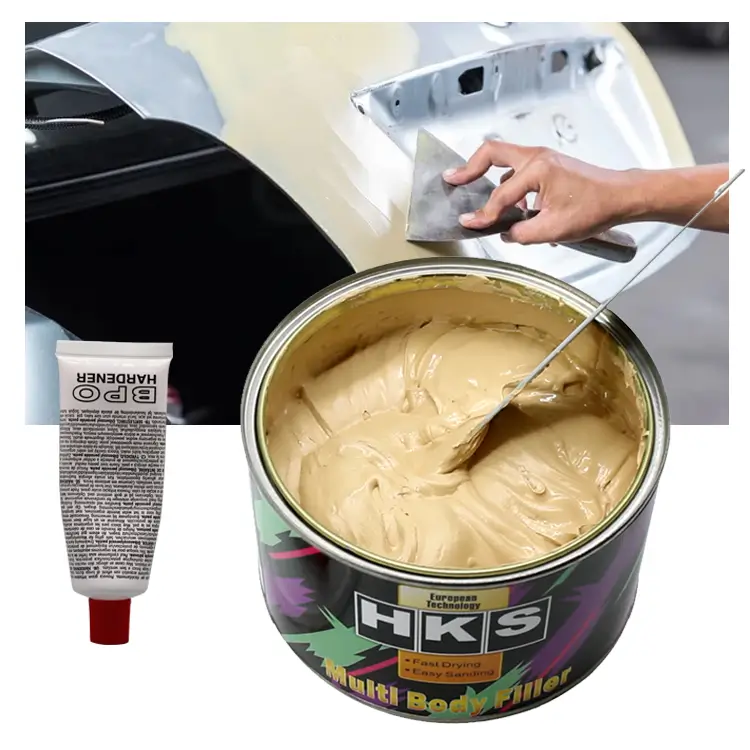
Bondo is a commonly used term for automotive body filler. It is a polyester-based filler designed to repair dents, low spots, scratches, and minor surface imperfections on metal, fiberglass, and some plastic panels. Once mixed with hardener and applied to the damaged area, Bondo becomes firm and can be shaped through sanding.
Because Bondo cures into a rigid material, sanding is essential. Proper sanding removes excess filler, blends the repair into the surrounding panel, and creates a surface that is ready for primer.
Why Proper Sanding Matters
Poor sanding can leave visible edges, scratches, pinholes, or uneven contours. If the surface is not shaped correctly, those flaws may show through the primer and paint layers.
A properly sanded filler repair helps you:
- match the original panel shape
- reduce sanding marks before priming
- improve adhesion of primer and paint
- save time during refinishing
- achieve a smoother final appearance
Best Tools for Sanding Bondo
Choosing the right tools improves both accuracy and efficiency. For most repair jobs, you will need:
- coarse sandpaper for initial shaping
- medium-grit sandpaper for leveling
- fine-grit sandpaper for finishing
- sanding blocks for flat areas
- flexible sanding pads for curved panels
- a dual-action sander for larger repairs
- a tack cloth and compressed air for cleaning
A sanding block is especially important because it helps maintain a flat, even surface. Hand sanding without a block may create waves or low spots.
Recommended Sanding Grit Progression
| Repair Stage | Recommended Grit | Purpose | Result |
|---|---|---|---|
| Initial shaping | 80–120 grit | Remove excess filler and form the repair | Fast material removal |
| Refine the shape | 150–180 grit | Smooth scratches and improve contour | More even surface |
| Final sanding before primer | 220–320 grit | Prepare for primer application | Paint-ready surface |
| Extra refinement | 400–600 grit | Reduce sanding marks | Cleaner finish |
This grit progression works well for most body filler repairs. Start with coarse grit only after the filler has fully cured, then move step by step to finer grits.
Step-by-Step Guide to Sanding Bondo
1. Let the Filler Cure Fully
Never sand Bondo before it has fully hardened. Sanding too early can cause tearing, clogging, and uneven shaping. Always follow the product’s recommended curing time.
2. Start by Shaping the Repair
Begin with 80 to 120 grit sandpaper. Use light-to-medium pressure and make long, controlled strokes. Focus on removing high spots and blending the filler into the surrounding area.
For flat surfaces, use a sanding block. For curved areas, use a flexible pad so the panel shape is preserved.
3. Check the Surface Frequently
Stop often and inspect the repair from different angles. Run your hand over the area to feel for unevenness. You can also use guide coat or strong side lighting to reveal low spots and scratches.
4. Move to a Finer Grit
Once the shape is correct, switch to 150 to 180 grit. This step removes deep sanding marks from the earlier stage and helps refine the repair further.
5. Finish with Fine Grit Sandpaper
Use 220 to 320 grit for the final surface before primer. If the repair requires extra smoothness, continue with 400 grit or even 600 grit, depending on your painting process.
6. Clean the Area Thoroughly
After sanding, remove all dust with compressed air, a tack cloth, or a clean microfiber cloth. Any remaining dust can affect primer adhesion and final paint quality.
7. Apply Primer
Once the surface is clean and smooth, apply a suitable primer. Primer helps seal the filler, improves adhesion, and provides a strong base for topcoat application.
Common Mistakes When Sanding Bondo
| Mistake | Problem | Better Approach |
|---|---|---|
| Starting with too fine grit | Slow shaping and poor efficiency | Begin with 80–120 grit |
| Too much pressure | Uneven surface and deep scratches | Use light, even pressure |
| No sanding block | Wavy or uneven surface | Use sanding block for flat panels |
| Not checking surface | Hidden imperfections remain | Inspect frequently |
| Poor cleaning | Primer adhesion issues | Remove dust before priming |
Avoiding these mistakes will improve both repair quality and sanding efficiency.
How to Tell When Bondo Is Sanded Correctly
A properly sanded repair should feel smooth by hand and blend naturally with the surrounding panel. The edges should be feathered, the contour should match the original shape, and no deep scratches or ridges should remain.
Before priming, ask these questions:
- Is the surface level with the surrounding area?
- Are the edges blended smoothly?
- Are there any pinholes, scratches, or low spots?
- Has all sanding dust been removed?
If the answer is yes, the repair is ready for primer.
Sanding Bondo on Different Repair Areas
Not every repair is the same. Flat areas, curved panels, and small spot repairs all require slightly different sanding approaches.
| Repair Area | Best Approach | Tool Tip |
|---|---|---|
| Flat panels | Use rigid sanding block | Maintains straight surface |
| Curved surfaces | Use flexible sanding pad | Follows body contours |
| Small repairs | Careful hand sanding | Avoid over-sanding |
| Large repairs | Use DA sander | Improves efficiency |
Matching the sanding method to the repair area helps you maintain the correct shape and finish.
Preparing Bondo for Primer and Paint
After sanding, the repair must be fully clean and dry before primer is applied. Primer bonds best to a surface that is free of dust, grease, and loose particles. Once primed, the repaired area can be blocked again if needed to achieve an even smoother finish before paint.
A good sanding process does more than remove extra filler. It creates a stable foundation for the entire refinishing system.
FAQ About Sanding Bondo
1.How long should Bondo cure before sanding?
Cure time depends on the product, temperature, and amount mixed. In most cases, wait until the filler is fully hardened and no longer soft to the touch.
2.What grit should I use to sand Bondo?
Start with 80 to 120 grit for shaping, then move to 180 grit, and finish with 220 to 320 grit before primer.
3.Can I sand Bondo by hand?
Yes. Hand sanding works well for small repairs and detailed areas. Use a sanding block whenever possible for flat surfaces.
4.Why does my Bondo clog sandpaper?
This usually happens when the filler is not fully cured or the sandpaper grit is too fine for initial shaping.
5.Should I prime Bondo before painting?
Yes. Primer is necessary to seal the filler, improve adhesion, and prepare the repair for paint.
6.What is the best tool for sanding body filler?
A sanding block is best for control and flatness, while a dual-action sander can speed up larger repairs.
Conclusion
Learning how to sand Bondo properly is essential for high-quality automotive body repair. With the right grit sequence, the right tools, and careful attention to shape and surface quality, you can turn a rough repair into a smooth, paint-ready finish.
For repair shops, distributors, and import wholesalers looking for reliable body filler solutions, SYBON provides professional-grade automotive filler products designed for efficient application, strong adhesion, and excellent sanding performance.
Source of this article:https://www.supersybon.com
Get to know us through more channels: