

Preventing & Fixing Auto Body Filler Cracking, Bubbling and Delamination
Auto body filler cracking is one of the most common and costly problems in automotive refinishing. Whether you call it putty, filler, or body putty, cracks, bubbles and delamination reduce repair quality, trigger callbacks, and damage your shop’s reputation. For import agents, distributors and repair business owners, understanding the root causes, prevention techniques and correct repair workflow is critical — and it’s exactly where choosing the right product (and the right supplier) pays off.
Why auto body filler cracking happens
Most failures of filler after repair are not mysterious — they are the predictable result of avoidable mistakes or poor materials.
1. Excessive thickness: Applying too thick a layer of filler traps internal stresses. As the vehicle vibrates or expands/contracts with temperature changes, a thick filler layer will crack.
2. Incomplete curing/drying: Topcoating or sanding before the filler is fully cured can trap solvents or moisture, causing bubbles, soft spots or lifting once the paint goes on.
3. Poor product quality: Low-grade fillers often have weaker adhesion and inferior resin systems, leading to poor cohesion with metal or underlying primer.
4. Moisture contamination: Introducing moisture during mixing (for 2K systems) or using inappropriate thinners can make the filler absorb moisture and swell under the finish.
5. UV and heat exposure: Long-term exposure to strong sunlight and heat accelerates aging and embrittlement of substandard fillers, causing premature cracking.
6. Improper surface prep: Filler won’t bond to rust, oil, old paint or loosely adherent surfaces. If the first pass isn’t compacted into the metal or primer, separation is likely.
Typical failure modes explained
1. Cracking: Often starts in the thickest areas or where filler spans unsupported seams; thermal cycling and vibration reveal internal weaknesses.
2. Bubbling / blistering of the paint: Usually caused by trapped solvents or moisture in the filler layer that vaporize after topcoat application.
3. Delamination / fall-off: Poor adhesion or insufficient compaction during application means the filler separates from the metal or primer.
4. Hardening & embrittlement: Aging in sunlight or thermal stress over time turns some fillers brittle and prone to fracture.
Correct workflow to prevent failures
Good technique + the right material = far fewer problems. For professional shops and distributors training their customers, these are non-negotiable best practices:
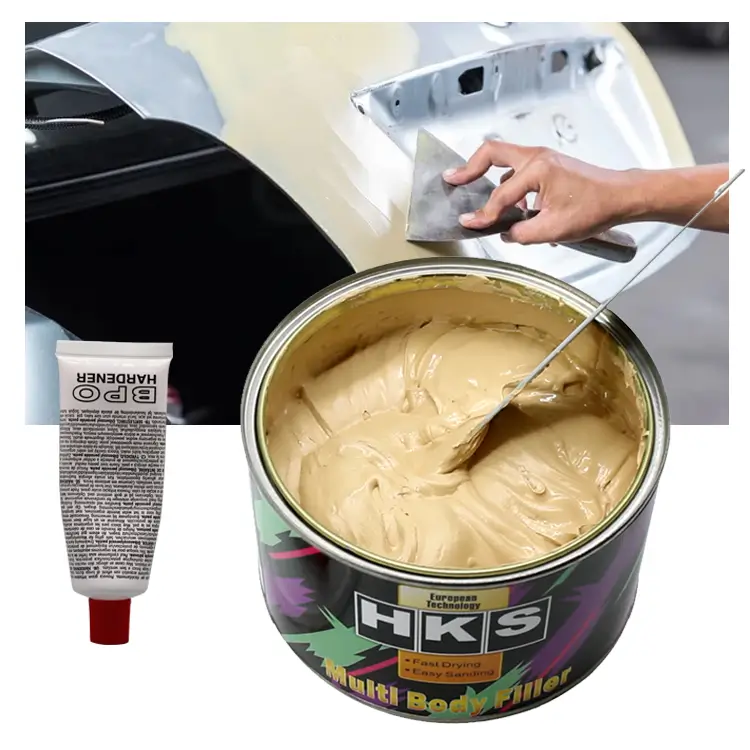
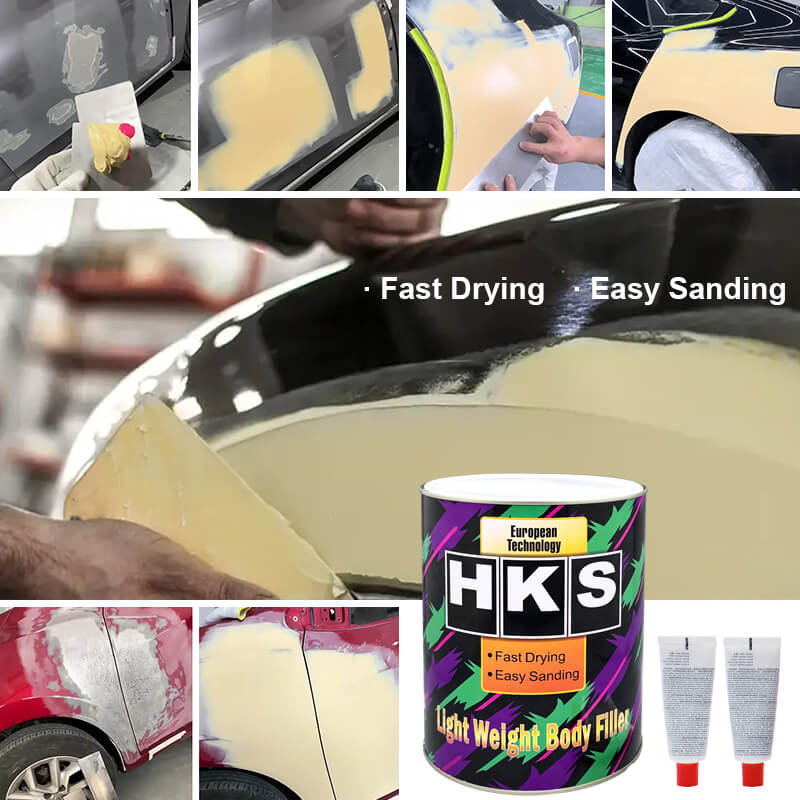
1. Thin, multiple passes: Apply filler in controlled thin layers, letting each layer cure before adding the next. “Thin and many” beats “thick and quick.”
2. Follow pot-life and mix ratios: For 2K fillers, measure hardener precisely. Incorrect ratios compromise curing and mechanical strength.
3. Complete cure before sanding/painting: Confirm full hardness and solvent evaporation — don’t rush to topcoat.
4. Surface prep: Remove rust, grease and old loose paint. Use appropriate primers and etchants where recommended.
5. Avoid moisture and solvent contamination: Use manufacturer-recommended hardeners and working conditions to avoid trapped moisture.
6. Protect from extreme heat/UV after repair: Store vehicles indoors or shaded while filler ages and cures to minimise thermal shock.
When things go wrong — repair recommendations
If you see cracks, bubbles or delamination, the safe professional approach is to rework, not patch:
1. Strip to sound metal: Remove the failed filler entirely and inspect the substrate for rust or hidden damage.
2. Repair the metal first: Fix any structural or panel issues (welding, hammering) so filler is only used as a finishing compound.
3. Reapply correctly: Use thin passes, correct hardener ratios and allow complete cure before primer and paint.
4. Avoid DIY band-aids: Amateur spot fixes often hide the problem and lead to worse damage and warranty claims.
Maintenance & inspection advice for fleet owners and body shops
Areas that have been repaired are inherently more vulnerable — schedule regular inspections and encourage customers to park vehicles out of direct sun when possible. Educate your staff — frequent, short training sessions on application thickness, hardener control and cure checks reduce failures dramatically.
Why choosing the right supplier matters
For importers, distributors and repair shop owners, product reliability matters as much as price. SYBON offers a balanced solution: competitively priced products with consistent, factory-controlled quality and a one-stop supply of automotive refinish materials. Compared with some big-name brands, SYBON may not have the same global marketing foohardener but our fillers match the performance standards you expect — delivered with strong value and local-market competitiveness.
If you want to offer your customers high-quality, cost-effective body filler that reduces callbacks and supports stronger margins, SYBON is an ideal partner. We are actively seeking global agents and distributors. If you run a paint shop, body shop or manage a fleet and want to test product performance, request samples and evaluate them side-by-side with your current brands.
For agents & distributors
SYBON provides full technical support and product training to help you introduce our line into your market. We supply product literature, mixing guides, and best-practice application training to reduce failures from the start — because fewer failures mean better reputation and higher repeat business for you and your customers.
Call to action
If you are an importer, distributor, paint shop owner or fleet manager interested in reducing auto body filler cracking and improving repair quality and margins, request SYBON samples and a distributor partnership. Please contact us via our website and send an inquiry email — we will get back to you within 24 hours to discuss samples, pricing and cooperative terms. Partner with SYBON for reliable finishing products that help you win business and reduce costly rework.
Source of this article:https://www.supersybon.com/
Get to know us through more channels: