

Why Body Filler Cracks — Causes, Fixes and How to Prevent It (A Practical Guide for Importers, Distributors and Repair Shops)
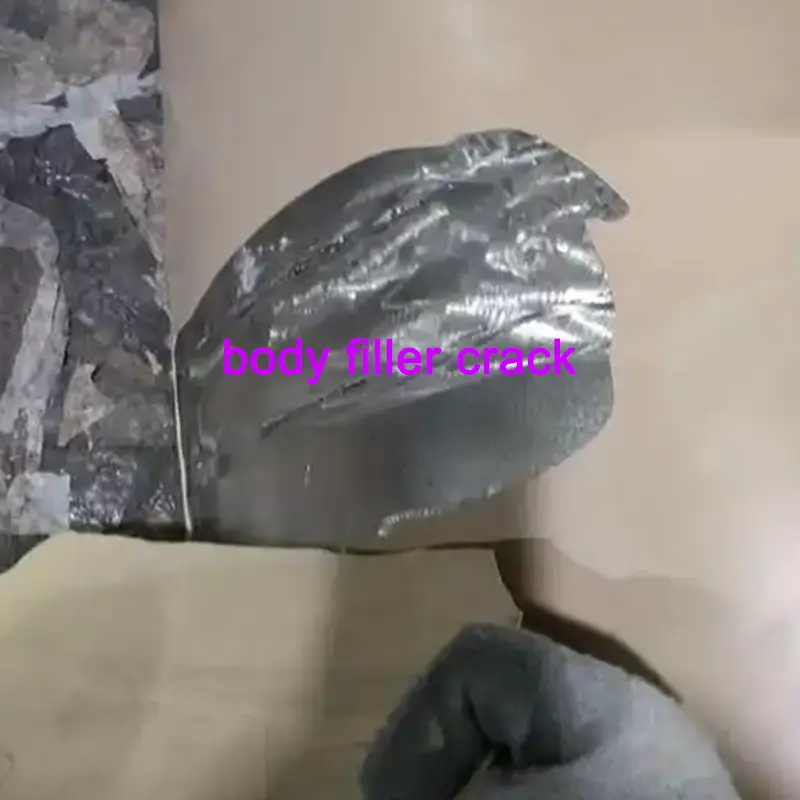
Body filler cracking in a repaired area is one of the most frustrating problems for refinishers and for the businesses that depend on reliable repairs. When the polyester putty (commonly called “body filler”) cracks beneath the topcoat it causes the painted finish to fail — producing callbacks, wasted materials, and damage to your reputation. In this article we explain why body filler cracks, list the primary causes, show practical remedies, and give clear prevention tips your technicians can follow today. This is written for import agents, wholesalers, dealers, fleet owners and professional repair shops who need durable, repeatable results.
The short answer: why body filler cracks
Why body filler cracks most often comes down to poor layer management, inadequate surface preparation, or incompatible chemistry between layers. In practice the failure modes are predictable and avoidable when you control application thickness, drying/cure times, feather edges, and product compatibility.
Main causes (what to look for)
1. Filler applied too thick in a single pass
Polyester fillers cure via an exothermic chemical reaction. If a technician applies a very thick layer at once, the outer surface can skin over and harden while the inner mass remains softer or contains residual reactive material. This mismatch in mechanical properties lets internal stresses form as the inner material shrinks or continues to cure — and the result is cracking that can propagate up through primer and topcoat.
2. Insufficient dry / cure time between layers
Multiple thin passes are best. When layers are built too quickly without allowing proper cure time, each new application imposes stress on incompletely cured lower layers. That trapped stress will eventually be released as cracks.
3. Poor feathering/edge preparation at the transition zone
The transition between old paint and the filled area (the feathered edge) must be properly sanded and free of solvent residue. If feather edges are not prepared correctly, adhesion is weak and the filler layer can separate or crack at the perimeter. Using coarse or wet sanding improperly can also drive solvents into lower layers and weaken adhesion.
4. Wrong thinner or incompatible primer under the filler
Using a primer or thinner that is not compatible with the filler system — or a primer that shrinks excessively as it cures — can cause the filler to lose support and crack. Solvent-rich systems can soften or swell the filler, while fast-shrinking primers create tensile stress in the coating stack.
5. Environmental factors (temperature, humidity)
Extremely low temperatures or very high humidity can slow or change cure chemistry and result in internal stresses or incomplete polymerization, both of which increase the chance of cracking.
Step-by-step remediation (how to fix cracking areas)
1. Remove the failed area thoroughly — sand out the cracked filler down to a sound substrate or to the original primer around the feathered edge. Remove all loose material until only well-bonded substrate or sound primer remains.
2. Clean the surface — degrease and remove sanding dust. Use a solvent recommended for your system and allow it to flash off completely.
3. Prime as needed — if bare metal or exposed primer is present, spray an appropriate epoxy or high-build primer compatible with your filler. Make sure the primer is fully cured per the technical data sheet.
4. Re-apply filler in thin layers — use multiple thin passes (2–4 mm max per pass depending on product; follow product data sheet). Mix filler and hardener at correct ratio and apply using light, controlled strokes.
5. Allow full cure between layers — follow the manufacturer’s indicated pot life and intercoat times; allow additional time in cool/humid conditions.
6. Sand, prime and topcoat — after full cure sand to shape, apply primer if required, then finish with your basecoat and clearcoat system.
Prevention checklist (best practices)
1. Always apply thin layers and build thickness in multiple passes.
2. Respect mix ratios and pot life for polyester fillers and hardeners.
3. Allow sufficient dry/cure times between each layer — err on the side of longer when in doubt.
4. Use proper feather-sanding: avoid overly aggressive wet sanding that may carry solvent into the filler substrate; use 600 grit or similar around feather edges to avoid bringing solvents into deep scratch layers.
5. Use compatible primers and thinners — follow product technical data and avoid mixing systems from different chemistries unless explicitly allowed.
6. Control the work environment: maintain recommended temperature and relative humidity for the materials you use.
7. Train technicians to inspect for underskinning or soft cores before primer and topcoat.
Why choosing the right supplier matters
Repeatable, high-quality repairs start with consistent materials. SYBON understands the needs of importers, distributors and repair facilities: our products balance competitive pricing with reliable performance. SYBON’s polyester fillers and refinish primers are developed and tested to match the handling and cure characteristics familiar to workshops used to premium brands — giving you the performance without the premium price tag.
SYBON is one of China’s leading automotive refinish manufacturers, offering one-stop procurement for a full range of automotive refinish products. While our brand may not be the most famous globally, our product quality mirrors that of the major brands, and our cost-effectiveness helps you open local markets and improve margins. We are actively seeking global agents and distributors.
Samples & distributor inquiries
If you are an agent, wholesaler, paint shop owner, fleet manager, or repair center owner and would like to test SYBON filler & primer systems, request free samples for comparison. SYBON welcomes distributor inquiries and offers full technical support to ensure local success. Please contact us via the contact form on our website or send us an email — we will reply within 24 hours to arrange samples and discuss distribution terms.
Source of this article:https://www.supersybon.com/
Get to know us through more channels: